2026-09-08 ·
What Affects Dumpster Rental Prices in Crescent Pennsylvania
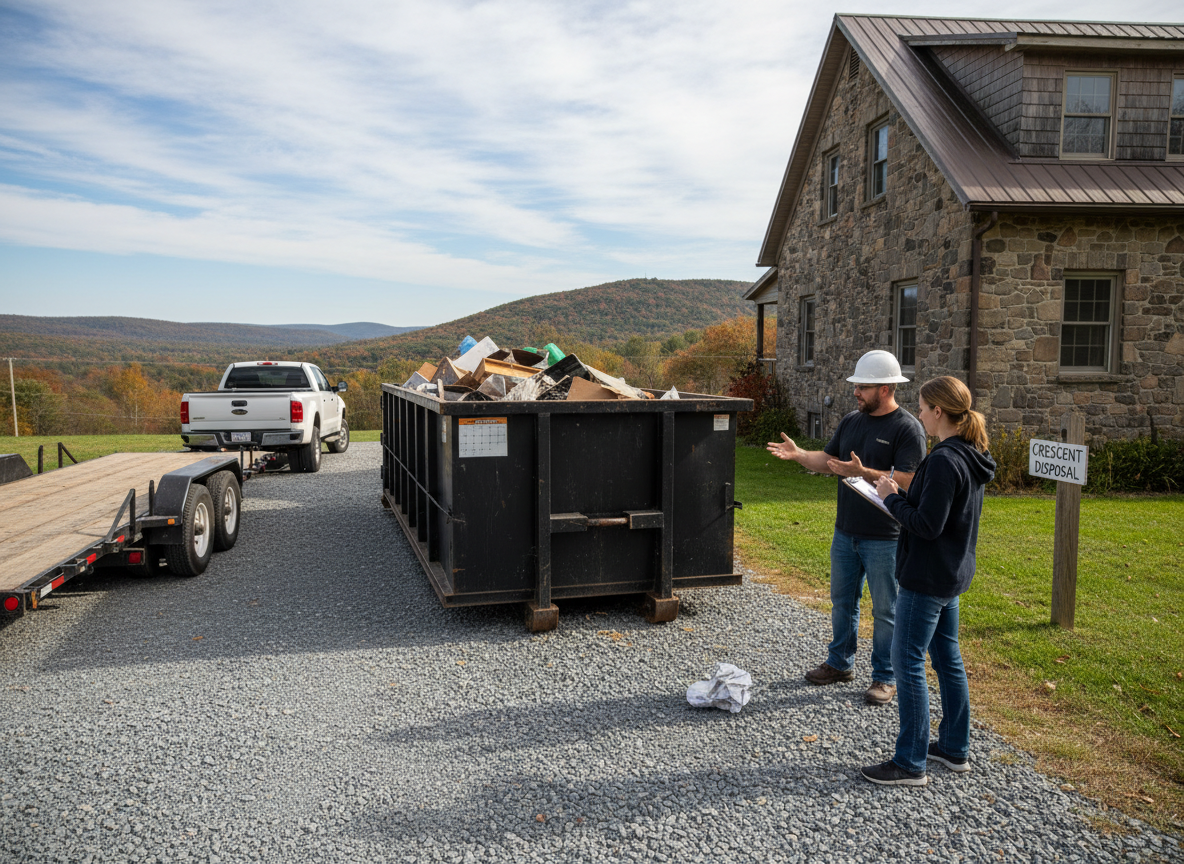
Several factors tied to Crescent properties and Allegheny County conditions shape dumpster rental prices, beginning with the container size selected, the length of time it sits on site, the materials placed inside, and how winter freezes or summer heat alter delivery and pickup logistics.
Dumpster Size Choices in Crescent
Crescent homes often feature older housing stock built on sloped lots near the Ohio River, so residents commonly need 10-yard or 20-yard units for bathroom remodels or garage cleanouts rather than larger 30-yard or 40-yard containers that larger Pittsburgh lots can accommodate. A smaller roll-off fits tighter driveways without blocking narrow streets in neighborhoods like Glen Osborne or Edgeworth, yet choosing the wrong capacity forces an extra swap-out that adds to the total. The big roll off dumpster rental option becomes necessary when clearing larger renovation debris, but over-ordering wastes money on unused space while under-ordering triggers repeat hauls. Local operators weigh these site constraints before quoting because Crescent terrain rarely allows easy repositioning once the unit is dropped.
Rental Duration and Scheduling Realities
Most Crescent projects run 7 to 14 days because homeowners tackle work on weekends around full-time jobs in Pittsburgh. Extending beyond that window raises the price because the container occupies space that could serve another job in nearby areas such as Moon Township or Coraopolis. Weather windows matter too: humid continental summers bring sudden storms that can delay loading, while cold winters freeze materials to the container floor and require extra time or equipment to empty. Scheduling around these patterns keeps costs predictable rather than letting an open-ended rental stretch into weeks of daily fees.
Waste Type and Allegheny County Rules
Construction debris, household junk, and yard waste each carry different handling costs in Allegheny County. Concrete and roofing shingles weigh more per cubic yard than mixed household items, pushing some loads toward higher tonnage surcharges. Yard waste peaks in fall when leaves blanket properties along the river corridor; the post Managing Fall Leaf and Yard Waste with Dumpster Rental in Allegheny County explains how to separate organics to avoid mixed-load penalties. Hazardous materials such as paint or asbestos trigger special handling that local landfills restrict, so operators must route those items separately and reflect that effort in the quote.
Seasonal Weather and Terrain Effects
Crescent winters bring prolonged freezes that stiffen soil and complicate placement on unpaved driveways, while summer heat and humidity speed vegetation growth that can overgrow a unit left too long. Steep grades common near the Ohio River demand careful truck positioning so the roll-off does not slide during drop-off. The article Winter Dumpster Rental Tips for Crescent Properties details how operators pre-treat surfaces and use shorter rental windows to manage ice. Access routes through neighborhoods like Sewickley Heights or Bell Acres often include narrow bridges or low-hanging branches that limit which trucks can reach the site, adding travel time reflected in the final price.
How Location Ties Into Pittsburgh-Area Pricing
Proximity to Pittsburgh landfills and transfer stations keeps base transport costs lower for Crescent jobs than for more distant townships, yet river-adjacent properties still require extra planning for flood zones and permit checks. Homeowners in Ambridge or Baden frequently combine dumpster rental with junk removal when a single container cannot handle mixed loads efficiently. Checking the guide Choosing Dumpster Size for Home Renovations Near the Ohio River helps match capacity to the actual debris volume before the truck arrives, preventing costly mid-project changes.